London has voted for political change. The Greens and Reform won control of London boroughs for the first time, while the Conservatives also gained one. Labour faced bad results, losing to the Greens, Conservatives and ‘no overall control’. Compared to the rest of the country, where Labour and the Conservatives faced far worse results, London was not too bad. Labour, the Conservatives and the Liberal Democrats won three-quarters of all seats in the capital, a far higher proportion than in the rest of England.
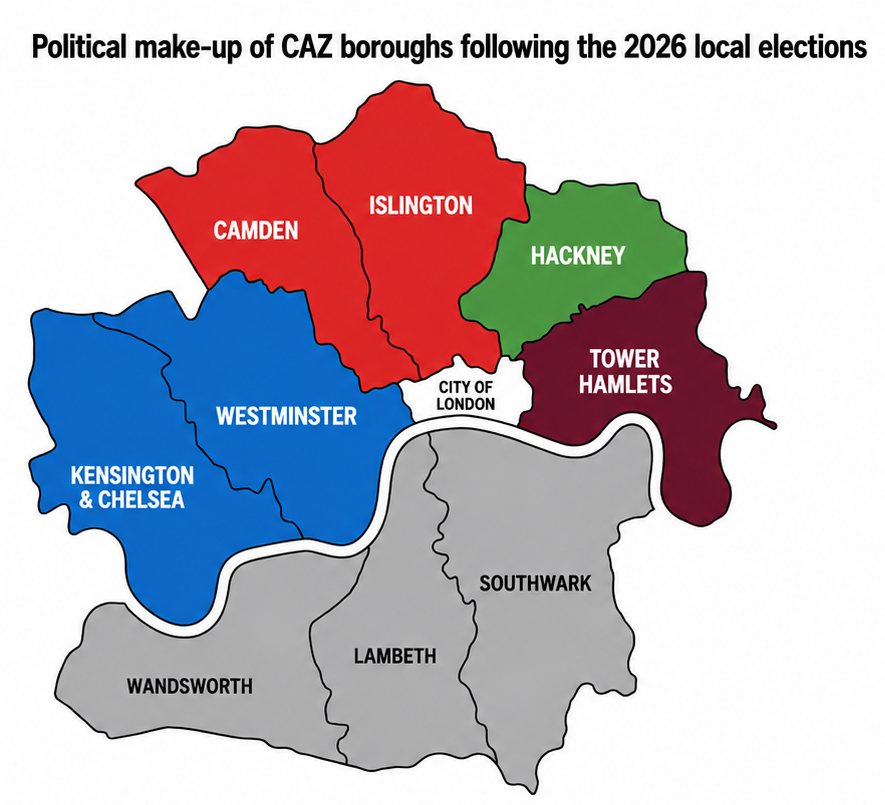
In central London, the big news was the Conservatives winning back Westminster from Labour, and by a comfortable margin. This result sets the new council leadership up for a showdown with Mayor Sir Sadiq Khan over the future of Oxford Street. Planning in the borough will inevitably change as a new cabinet is appointed. Kensington & Chelsea was easily won by the Conservatives.
Camden was held by Labour (although the previous Labour Leader, Richard Olszewski, lost his Fortune Green seat to the Liberal Democrats) with the Greens making significant inroads into their majority. Seats in Covent Garden and (to a lesser extent) Bloomsbury were won by the Greens (as well as the former Planning Committee Chair Heather Johnson’s seat of Regent’s Park) creating a new dynamic for planning in this section of the city centre. Islington remained Labour controlled, with three Labour councillors elected in the Bunhill ward adjoining the City. Hackney, both the mayor and the council, were won by the Greens with potentially profound implications for policy on the City Fringe. Tower Hamlets was held by Mayor Lutfur Rahman and his Aspire party, so no change is likely there.
Across the river, Southwark and Lambeth fell into ‘no overall control’ and their administration will depend on the precise configuration of agreements between the parties on who should lead them. Wandsworth was lost by Labour to ‘no overall control’, but with the Conservatives as the largest party.
Taken together, the politics of planning in central London is bound to change. It is possible that the Mayor of London will intervene more if there is any threat to development. All of this will take place in the run-up to the next mayoral election in 2028. London government will be even more interesting than before.